
Gornergrat & Sunnegga (3,089m)
Morning (AM) • 06:00 – 12:00 CET
Live Matterhorn Visibility Score & Alpine Telemetry in Zermatt
Partially visible
Good visibility with passing clouds or light ridge banner.
“Classic alpine diurnal pattern at Gornergrat (East): Morning scores a solid 7/10 before afternoon convective clouds build (5/10). Go before noon CET.”
Same forecast as Gornergrat
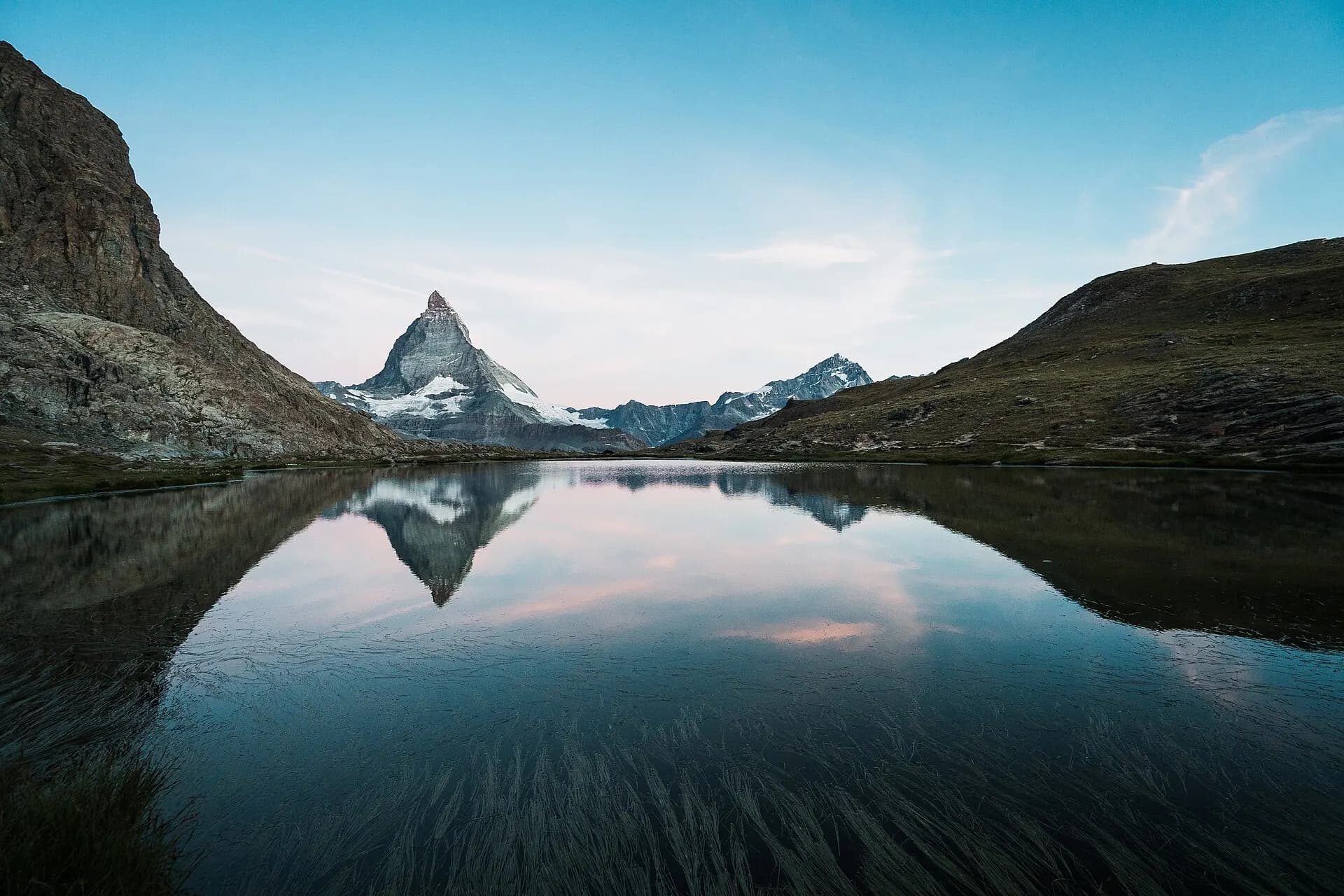
Which Mountain Is Reflected in Riffelsee?
The Matterhorn east face is the mountain reflected in Riffelsee. Live wind and clarity for Sunnegga, Stellisee, and the Rotenboden walk.
- Riffelsee Access
- 5-Min WalkExit Gornergrat train at Rotenboden (2,815m) & walk down 60m
- Stellisee Access
- 20-Min HikeSunnegga funicular (2,288m) + Blauherd gondola (2,571m)
- Liquid Water Season
- Mid-Jun – OctLakes are frozen & snow-covered November through early June
- Wind Backup Spot
- Lower RiffelseeSmaller pond 100m west stays glassy when main lake ripples
Riffelsee Matterhorn Reflection Verdict Today
Main Riffelsee and Stellisee basins will show light surface ripples; use a tripod with a 1–2s ND filter or walk 100m to the sheltered Lower Riffelsee pond.
Morning (AM): 7/10 (Partially Visible) • Afternoon (PM): 5/10 (Barely Visible).
Winter Freeze Period (Lakes typically frozen/snow-covered Nov – Early June)
Walk 2 minutes west past the main Riffelsee shore to the smaller, wind-sheltered secondary pond ("Lower Riffelsee") for a cleaner mirror surface.
10-Day Alpine Visibility Forecast — Riffelsee
High-altitude summit clarity projection for the 4,478m pyramid
| Date | Day | Peak Clarity | Morning (AM) (06:00–12:00 CET) | Afternoon (PM) (12:00–18:00 CET) |
|---|---|---|---|---|
| Sun | 7/10 | 7/10 (Partially Visible, Mid-Cloud 37%, Vis 62.4 km) | 5/10 (Barely Visible, Mid-Cloud 80%, Vis 54.8 km) | |
| Mon | 10/10 | 7/10 (Partially Visible, Mid-Cloud 39%, Vis 27.8 km) | 10/10 (Visible, Mid-Cloud 0%, Vis 35.9 km) | |
| Tue | 10/10 | 10/10 (Visible, Mid-Cloud 0%, Vis 59.8 km) | 7/10 (Partially Visible, Mid-Cloud 31%, Vis 70.5 km) | |
| Wed | 10/10 | 10/10 (Visible, Mid-Cloud 0%, Vis 43.4 km) | 10/10 (Visible, Mid-Cloud 0%, Vis 41.5 km) | |
| Thu | 4/10 | 2/10 (Not Visible, Mid-Cloud 36%, Vis 0.9 km) | 4/10 (Barely Visible, Mid-Cloud 2%, Vis 13.9 km) | |
| Fri | 10/10 | 10/10 (Visible, Mid-Cloud 0%, Vis 88.1 km) | 10/10 (Visible, Mid-Cloud 0%, Vis 88.8 km) | |
| Sat | 10/10 | 10/10 (Visible, Mid-Cloud 0%, Vis 38.1 km) | 10/10 (Visible, Mid-Cloud 0%, Vis 88.9 km) | |
| Sun | 10/10 | 10/10 (Visible, Mid-Cloud 0%, Vis 91 km) | 10/10 (Visible, Mid-Cloud 0%, Vis 78.1 km) | |
| Mon | 10/10 | 10/10 (Visible, Mid-Cloud 0%, Vis 91.1 km) | 10/10 (Visible, Mid-Cloud 0%, Vis 91.2 km) | |
| Tue | 10/10 | 10/10 (Visible, Mid-Cloud 0%, Vis 89 km) | 10/10 (Visible, Mid-Cloud 5%, Vis 89.9 km) |
How this score works
Atmospheric Layer Diagnostics — Riffelsee
Microclimate inputs weighted by altitude impact on the Matterhorn pyramid
Mid-Level Clouds (2k–6km)
Cloud band at summit elevation. Intermittent ridge obstruction.
Low-Level Valley Fog (<2km)
Clear sightlines looking up from Kirchbrücke in Zermatt village.
Horizontal Visibility
Crisp air transparency across the Mattertal and Monte Rosa massif.
Summit Wind & Föhn Drift
The Zermatt camera shows a clear summit with no plume. Hotel Schönegg
Live Zermatt & Matterhorn Webcams
Live Optical SensorsReal-time optical summit verification across Zermatt village & high-alpine vantage points
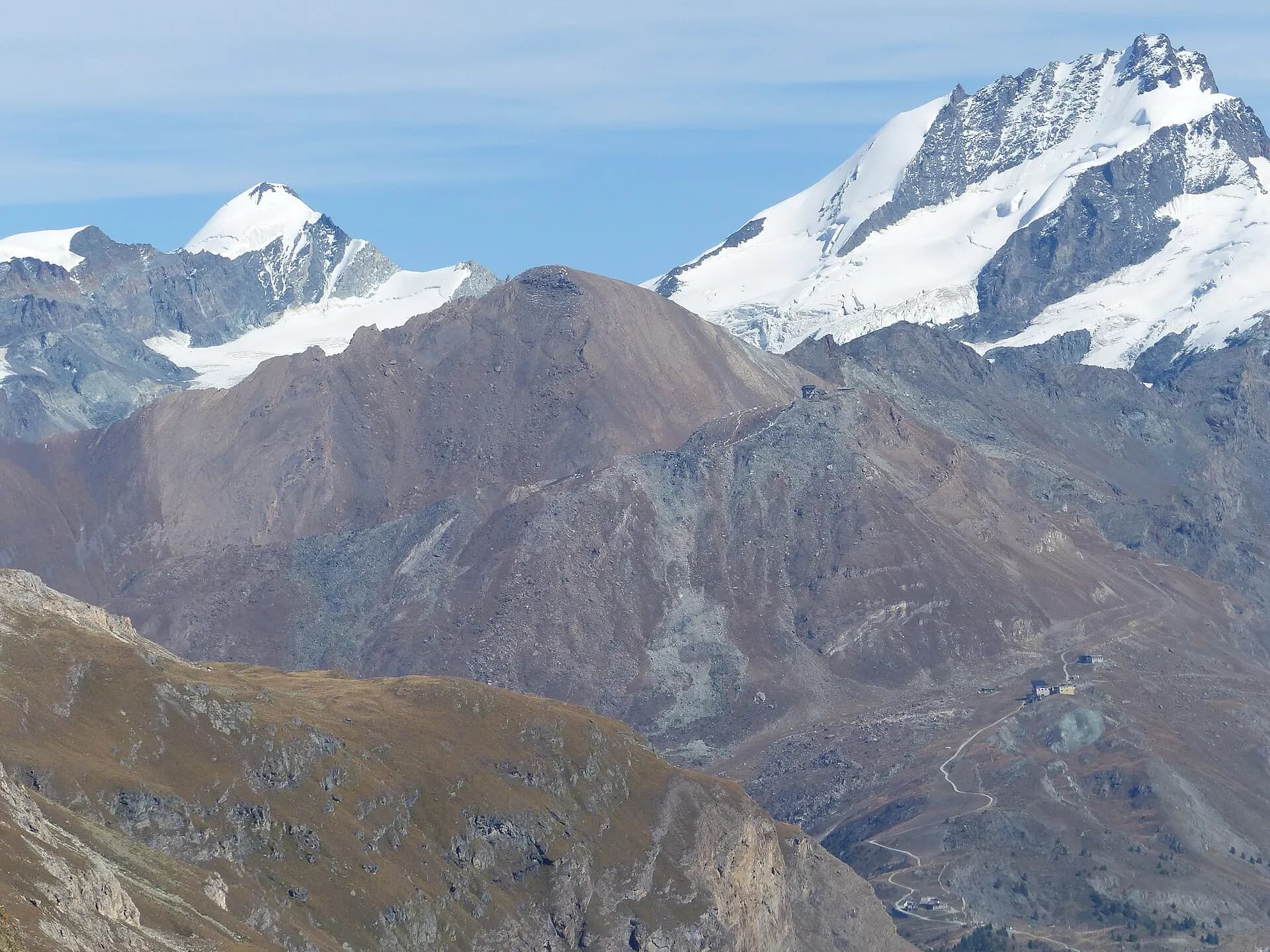
Roundshot 360° optical sensors update every 10–15 minutes.
Riffelsee Visibility Takeaways (TL;DR)
- 01.A symmetrical Matterhorn water reflection requires THREE simultaneous conditions: a clear East-face sightline (Visibility Score ≥ 7/10), calm surface wind (< 12 km/h), and liquid ice-free water (mid-June through late October).
- 02.Even on a 10/10 sunny bluebird day, a 18 km/h breeze will turn Riffelsee and Stellisee into choppy waves with zero mirror reflection—always check our live Surface Wind card above.
- 03.Riffelsee (2,757m via Rotenboden on the Gornergrat line) is reachable by 07:30 CET on the first morning train when alpine air is calmest, whereas Stellisee (2,537m via Sunnegga–Blauherd) opens around 08:15–08:30 CET.
- 04.Photographer Secret: If a light breeze (12–20 km/h) ripples the main Riffelsee basin, walk 100 meters further down the trail to the smaller "Lower Riffelsee" tarn, which is sheltered by a moraine ridge and stays glass-still.
Riffelsee vs. Lower Riffelsee vs. Stellisee Mirror Lake Comparison
| Reflection Lake | Elevation | How to Reach from Zermatt | Foreground & Wind Resistance |
|---|---|---|---|
| Upper Riffelsee (Main Lake) | 2,757 m | Gornergrat train to Rotenboden (28m) + 5-min walk | Closest, largest Matterhorn reflection; exposed to easterly/southerly breezes after 10:00 CET. |
| Lower Riffelsee (Second Pond) | 2,745 m | 2-min walk west past Upper Riffelsee along the trail | High wind resistance — sheltered by natural earth bank; best backup when main lake is rippled. |
| Stellisee (Sunnegga-Blauherd) | 2,537 m | Sunnegga funicular + Blauherd gondola + 20-min walk | Iconic partially submerged boulders and cotton grass; slightly wider valley framing. |
| Grindjisee (5-Seenweg) | 2,334 m | 45-min hike below Stellisee on the 5-Lakes Trail | Surrounded by larch trees (highest wind shelter of all Zermatt lakes, ideal in October). |
| Leisee (Sunnegga Terrace) | 2,232 m | Sunnegga funicular (4.5m) + free shuttle elevator | Family-friendly lake right below Sunnegga sun terrace; easiest access with kids. |
1. The 3 Rules of Riffelsee & Stellisee Mirror Reflections
Thousands of visitors hike to Riffelsee or Stellisee on a sunny afternoon expecting the famous postcard mirror photo, only to find dark, choppy water with no reflection at all—or a frozen snowfield in May.
Capturing the inverted Matterhorn pyramid in water is a precision microclimate game governed by three physical factors that you can verify right here before leaving Zermatt:
- Rule 1 — Surface Wind Speed Must Be Under 12 km/h (7.5 mph): Water acts as a specular mirror only when capillary waves are absent. At 0–10 km/h, the reflection is razor-sharp. At 12–20 km/h, ripples blur the peak into vertical streaks. Above 22 km/h, the reflection disappears completely.
- Rule 2 — Mid-Level Cloud Cover Must Be Low (Score ≥ 7/10): Because both Riffelsee (2,757m) and Stellisee (2,537m) look southwest toward the 4,478m summit, any cloud band sitting at 3,200m–4,200m blocks the upper pyramid in both the sky and the water reflection.
- Rule 3 — Seasonal Lake Thaw Window (Mid-June to Late October): Sitting between 2,537m and 2,757m, Stellisee and Riffelsee freeze solid in late October/November and remain buried under winter snowpack until mid-to-late June. In early June, expect dramatic half-melted turquoise ice floes.
2. Why Morning (07:15–09:30 CET) Is Crucial for Lake Reflections
In high alpine valleys, wind speed follows a strict daily rhythm. Overnight radiative cooling stabilizes the air mass, leaving the lakes dead calm at dawn. Once the morning sun heats the Mattertal rock walls around 10:00 CET, thermal valley breezes (anabatic winds) begin blowing upslope at 15–25 km/h—rippling the lakes just as afternoon cumulus clouds start forming on the Hörnli Ridge.
Because the Gornergrat Bahn cogwheel train departs Zermatt at 07:00 CET in summer, you can step off at Rotenboden at 07:28 CET and stand at Riffelsee by 07:33 CET in dead-calm air with golden morning light on the East Face.
3. Sunnegga & The 5-Lakes Hike (5-Seenweg) Strategy
If you are hiking the famous 5-Seenweg (Stellisee → Grindjisee → Grünsee → Moosjisee → Leisee, 9.8 km, ~2.5 hours), always start at the top (Blauherd, 2,571m) as soon as the gondola opens so you reach Stellisee first while the water is still calm. Even if a midday breeze picks up later on your hike, Grindjisee (2,334m) is sheltered by tall larch trees that block the wind and preserve a reflection well into the afternoon.
Frequently Asked Questions — Riffelsee
Live answers and alpine guidance for Riffelsee
Which mountain is reflected in the Riffelsee?
Right now (04:25 CET), Riffelsee scores 7/10 (Partially Visible — Morning AM: 7/10, Afternoon PM: 5/10). The Matterhorn. From the Rotenboden stop on the Gornergrat railway, a five-minute walk reaches Riffelsee, where the east face fills the reflection. Sunnegga and Stellisee show the same peak from a lower angle.
Are Riffelsee Matterhorn reflection conditions good today?
Check our live Riffelsee & Stellisee Reflection Diagnostic card at the top of this page! Optimal mirror reflections require a live Visibility Score of 7–10/10 combined with surface wind speeds under 12 km/h during the ice-free summer/autumn window (mid-June through October).
Which is better for seeing the Matterhorn reflection: Riffelsee or Stellisee?
Riffelsee (2,757m, reached via the Gornergrat train to Rotenboden + a 5-minute walk) offers the closest, largest Matterhorn reflection and can be reached earlier in the morning (07:30 CET) when wind is calmest. Stellisee (2,537m, reached via Sunnegga–Blauherd + a 20-minute walk) offers iconic foreground boulders and is the starting point of the 5-Lakes Hike.
Is Riffelsee frozen in May, June, or November?
Yes. At 2,757 meters, Riffelsee is frozen and covered in snow from November through early June (part of the Gornergrat winter ski/snowshoe area). Partial turquoise ice melt usually occurs between June 10 and June 25, with full liquid mirror reflections available from late June through late October.
What should I do if Riffelsee is too windy for a reflection?
First, walk 100 meters west past the main Riffelsee basin to the smaller "Lower Riffelsee" pond, which sits in a sheltered hollow and often stays mirror-smooth when the main lake is choppy. Alternatively, attach a 6-stop or 10-stop ND filter and shoot a 15-to-30-second long exposure to smooth the water ripples into a misty reflection.
Compare Other Zermatt Matterhorn Viewpoints Right Now
All ViewpointsGornergrat Ridge (3,089m)
Gornergrat webcam and weather today. See if the Matterhorn is clear before you buy the Zermatt to Gornergrat train ticket.
Matterhorn Glacier Paradise / Klein Matterhorn (3,883m)
Klein Matterhorn cable car, webcam, and weather at Matterhorn Glacier Paradise (3,883m), plus the live Trockener Steg view.
Sunnegga
The Sunnegga funicular is the lower terrace for the Matterhorn east face, Stellisee, and the 5-lakes walk. Use it when you want the easy start, not the closest reflection.
Zermatt Village (Kirchbrücke & Riedweg)
Check real-time Matterhorn visibility from Zermatt village (Kirchbrücke bridge & Riedweg viewpoint). Live webcam feed, sunrise alpenglow timing, and valley fog conditions with zero lift tickets required.
Related Zermatt & Matterhorn Field Guides
All guides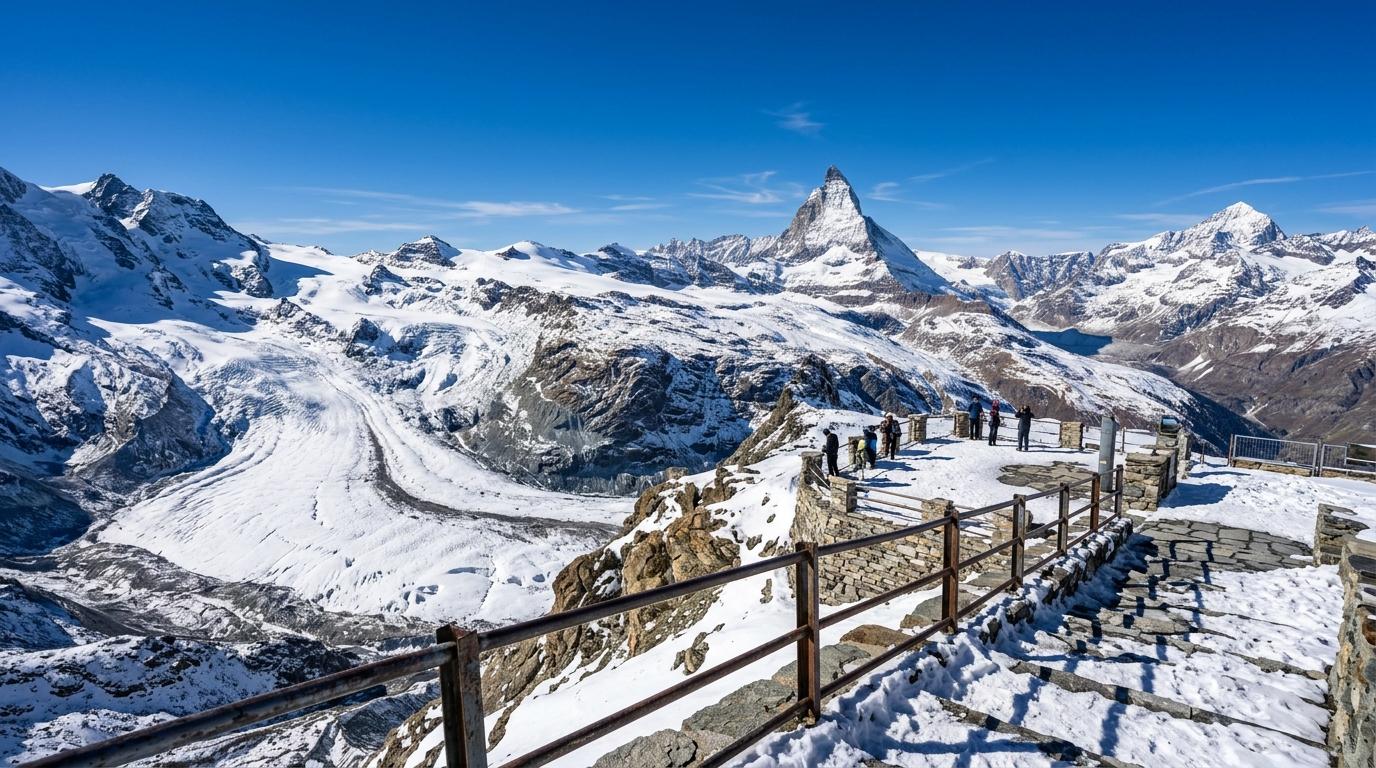
Gornergrat vs. Glacier Paradise
Compare Gornergrat (3,089m East Face) and Matterhorn Glacier Paradise (3,883m South/Breithorn Aspect) by Matterhorn angle, cloud resilience, ticket cost, and altitude.
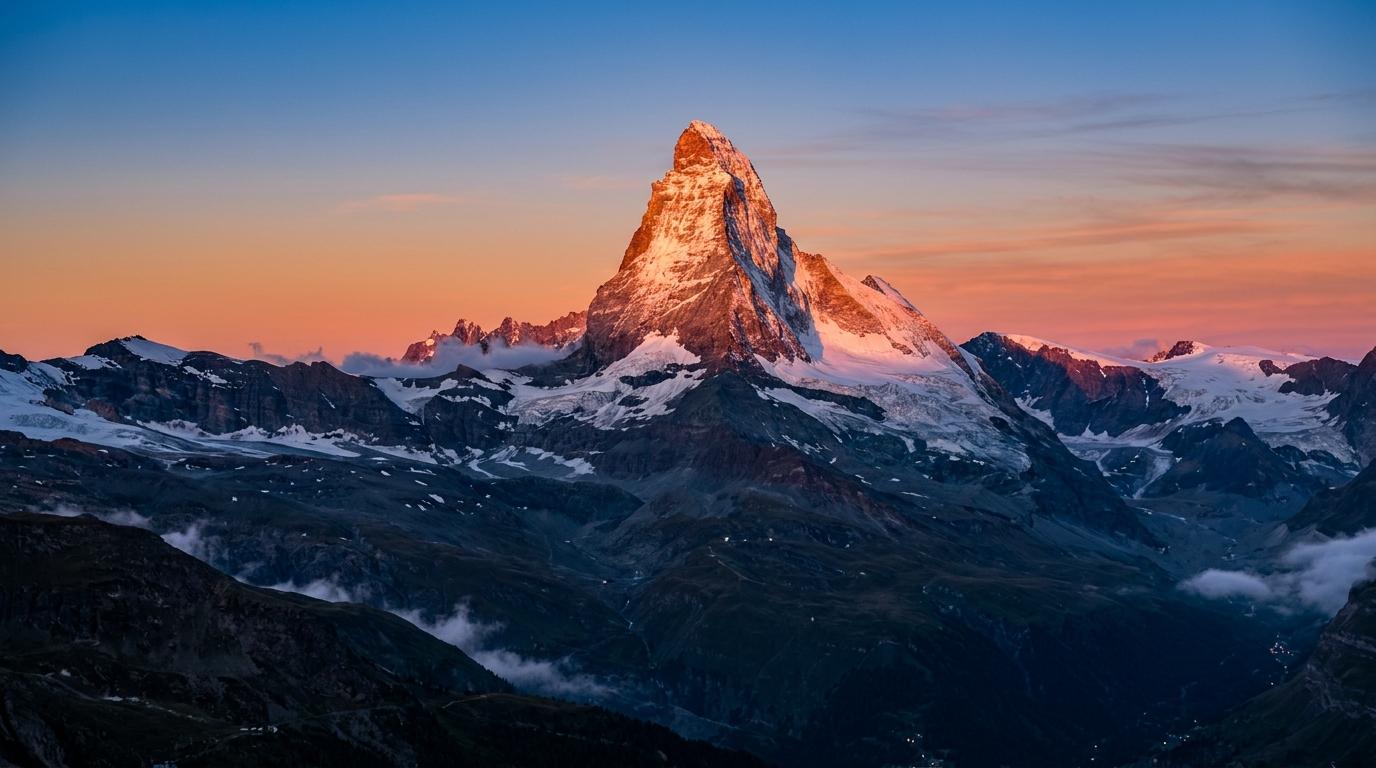
Zermatt Weather by Month
Morning (06:00–10:30) beats afternoon 78% of the year. Compare 30-year Matterhorn clear-sky odds from July (52%) to Sep (72%) & Dec (89%) + 10-day tracker.
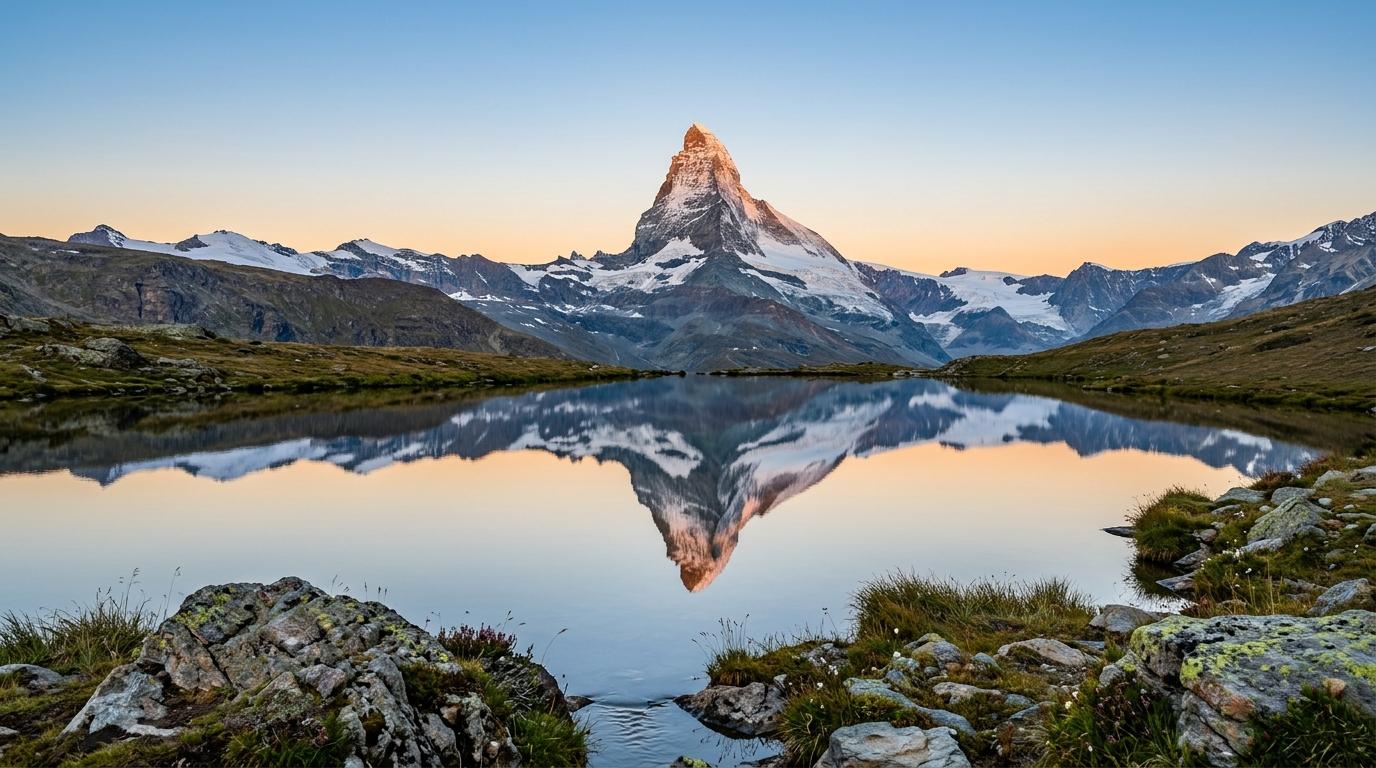
Best Photo & Sunrise Spots
Exact locations, walking times, and optimal sun angles for Zermatt’s best Matterhorn photo spots: Kirchbrücke sunrise, Stellisee, Riffelsee, Findeln, and Sunnegga.